
Aluminium casement windows are the most common opening window type in the UK. Whether you are looking at a contemporary new build, a traditional replacement window, a steel-look design or a flush casement window, there is a good chance you are looking at a variation of the same basic principle.
The reason is simple. Casement windows are practical, secure, weather-resistant and versatile. They can be manufactured in a wide range of sizes and styles and remain the benchmark against which other opening window types are judged. What has changed over the years is not how the window works, but how it is designed, engineered and manufactured.
Why Is It Called A Casement Window?
The word “casement” has its origins in Old French and Medieval Latin, referring to something enclosed or set within a frame. By the fifteenth century, the term was being used in England to describe framed windows that opened on hinges rather than sliding within a frame.
The earliest casement windows were typically made from wrought iron and contained small diamond-shaped panes of glass held together by lead strips. These windows were common throughout Britain long before sash windows became fashionable during the Georgian period.
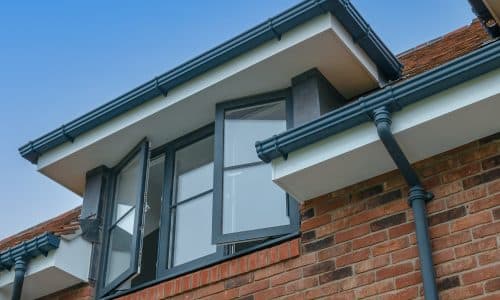
What’s interesting is that modern aluminium casement windows are, in engineering terms, the direct descendant of that centuries-old design. The materials, glazing and hardware have changed dramatically, but the principle remains exactly the same. A sash is hinged on one edge and seals against its frame when closed.
The earliest casement windows were typically made from wrought iron and contained small diamond-shaped panes of glass held together by lead strips. These windows were common throughout Britain long before sash windows became fashionable during the Georgian period.
The Window Type You Already Know
When homeowners think about aluminium windows, they often focus on brands, colours, flush styling or steel-look aesthetics.
What many people do not realise is that most opening aluminium windows sold in the UK today are casement windows.

Whether it is a standard replacement window, a flush casement design, a heritage steel-look product or a large commercial window, the underlying operation is usually the same. The sash opens on hinges and closes against a weather-sealed frame.
This simple design remains one of the most effective ways of providing ventilation, security and weather protection.
How A Casement Window Works
An aluminium casement window consists of an outer frame fixed into the structural opening and one or more opening sashes attached using hinges.
Most aluminium casement windows open outwards and are available as either side-hung or top-hung designs. The sash is operated using a handle connected to a multi-point locking system which secures the window at several points around the frame.
Unlike sliding windows, which move within tracks, a casement window closes under compression. The sash presses firmly against weather seals around the frame, helping to reduce air leakage, draughts and water penetration.
This compression seal is one reason casement windows continue to outperform many alternative window designs in exposed weather conditions.
Standard Aluminium Casement Windows
The standard casement window remains the most widely used aluminium window design.
These windows feature an opening sash that projects slightly beyond the outer frame, creating the familiar stepped appearance seen on most modern homes. The design is cost-effective, reliable and suitable for almost every type of residential property.
Virtally all aluminium brands offer this kind of overlapping sash design where the vent closes firmly onto a rebate.

overlapping casement design
Flush Casement Windows
Flush casement windows are designed so that the opening sash sits level with the outer frame when closed.
The result is a cleaner and more symmetrical appearance that many homeowners associate with traditional timber windows. Flush casement designs have become increasingly popular in both contemporary homes and heritage properties where a more refined appearance is required.
Examples include Smart Alitherm Flush, Decalu88 Flush, Cortizo, Origin OW70, Reynaers and several other brands.

Heavy-Duty Casement Windows
Not all casement windows are designed for domestic-sized openings. Heavy duty casement windows use larger and stronger profiles, reinforced hardware and enhanced testing to accommodate bigger glass units and larger opening vents. They can also be used in the home.
These systems are often specified for commercial buildings, schools, apartment developments and contemporary homes where standard residential windows may not be suitable. From a distance they can look similar to standard casement windows, but the sash is typically a deeper and larger profile.
All major systems companies involved in commercial and residential aluminium windows and doors offer a heavy-duty casement window.
Dummy Casement Windows
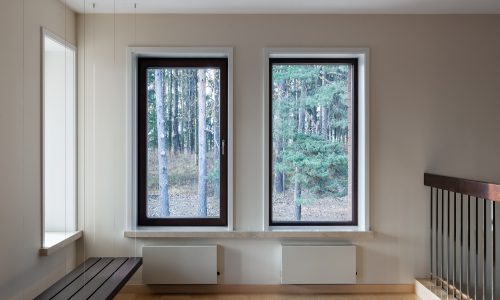
A dummy casement window is a fixed window designed to look like an opening window. The purpose is purely visual. By replicating the appearance of an opening sash, dummy casements create consistent sightlines across an elevation without introducing unnecessary opening vents.
They are commonly used in contemporary homes, commercial buildings and large window combinations where symmetry is important. Many homeowners are unaware that some of the windows they see are fixed rather than opening because the detailing is so convincing.
Steel Look Casement Windows
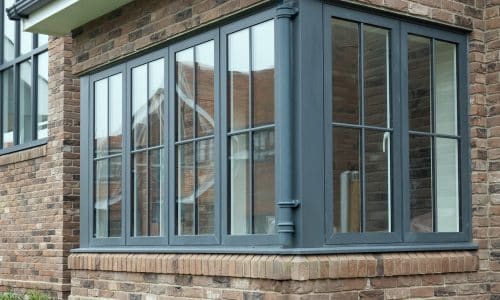
Steel-look windows are among the most desirable aluminium window styles available today. Inspired by traditional steel windows, these products combine slim sightlines with glazing bars and heritage styling to recreate the appearance of classic industrial and period glazing.
Although their appearance is very different from a standard casement window, most steel-look products still operate using conventional side-hung casement principles. Examples include Aluco Elite, Reynaers SlimLine 38 and other specialist heritage systems designed to replicate traditional steel windows.

French Casement Windows
Steel-look windows are among the most desirable aluminium window styles available today. Inspired by traditional steel windows, these products combine slim sightlines with glazing bars and heritage styling to recreate the appearance of classic industrial and period glazing.
Although their appearance is very different from a standard casement window, most steel-look products still operate using conventional side-hung casement principles. Examples include Aluco Elite, Reynaers SlimLine 38 and other specialist heritage systems designed to replicate traditional steel windows.

Top and Side Hung Casement Windows
Top and side hung aluminium casement windows differ in the hinge and handle placement.
For top hung windows the handles are at the bottom with the hinges on each side, allowing the window to project outwards from the top.
Side hung windows have the hinges top and bottom with the handles on the side, allowing them to hinge outwards from the side.
Both types are available with fire escape or easy-clean hinges.

Why Casement Windows Remain So Popular
Despite the arrival of tilt and turn windows, pivot windows and other specialist opening systems, the casement window remains the most widely specified opening window in the UK.
It is simple, reliable, secure and adaptable. It can be used in traditional homes, contemporary architecture, commercial buildings and conservation projects. It can be manufactured as a standard, flush, heritage, steel-look or heavy-duty system.
The technology has evolved considerably over the centuries. The principle itself remains largely unchanged. For most homeowners, that is exactly why the aluminium casement window continues to be the default choice.
More information and where to buy aluminium casement windows
Aluminium casement windows remain the benchmark window design because they combine simplicity, performance and flexibility. From traditional flush casement windows and steel-look designs through to large commercial systems and specialist heritage products, most opening aluminium windows still rely on the same basic principle developed centuries ago. The technology has changed dramatically. The idea itself has not.
Contact us for details of the latest casement window brands, designs and styles. From classic casements to slimline, steel look or for commercial buildings. Use our contact form to get in touch and discuss your project.