
Commercial aluminium windows cover everything from a school refurbishment to a twelve-storey residential block, and the specification decisions are different from those in a house.
Sizes are larger. Opening methods are chosen for safe cleaning and controlled ventilation rather than convenience. Weather performance is tested and classified rather than assumed. Buildings are often occupied while the work is carried out. And the responsibility for getting it right sits with a specifier, a contractor or a building owner rather than a homeowner.
This page explains what is available, what should be specified, and how to tell whether the company quoting can actually deliver it.
We have worked in the aluminium industry since 1989 and we do not sell windows. If you are specifying, tendering or pricing a commercial glazing package and want an independent view on the system, the supplier or the quotation, get in touch.
Commercial vs Residential Windows
A common belief is that commercial windows are somehow inferior to those sold direct to homeowners. It is the wrong way round, and in most respects they are the same product.
The aluminium profiles, the powder-coated finish, the components and the glass are identical. Both are manufactured to the same standards. Many commercial windows carry substantially better weather performance classifications than anything sold into the home, and some of the highest-performing insulated systems on the UK market are commercial products that a homeowner will never be offered.

Most residential opening windows sit around 1200mm wide. Heavy-duty commercial versions of the same systems use larger sash profiles and different hardware, taking opening sizes to 1600mm and beyond. Those larger sashes need different opening methods, because a 1600mm side-hung casement at fourth-floor level is neither safe to clean nor sensible to open.
New homes and apartment developments frequently use standard residential systems. Whether that is the right decision depends on the building height, the exposure, who will maintain the windows and how they will be cleaned in twenty years’ time.
Standards and specification for commercial aluminium windows
On a typical residential property where windows are being replaced, these are simply bought. On a commercial building either refurbished or built from new, windows are specified.
There are many standards applicable to commercial windows with common or overlapping standards for material quality, glass, security or weather performance.
Here are the common types used.
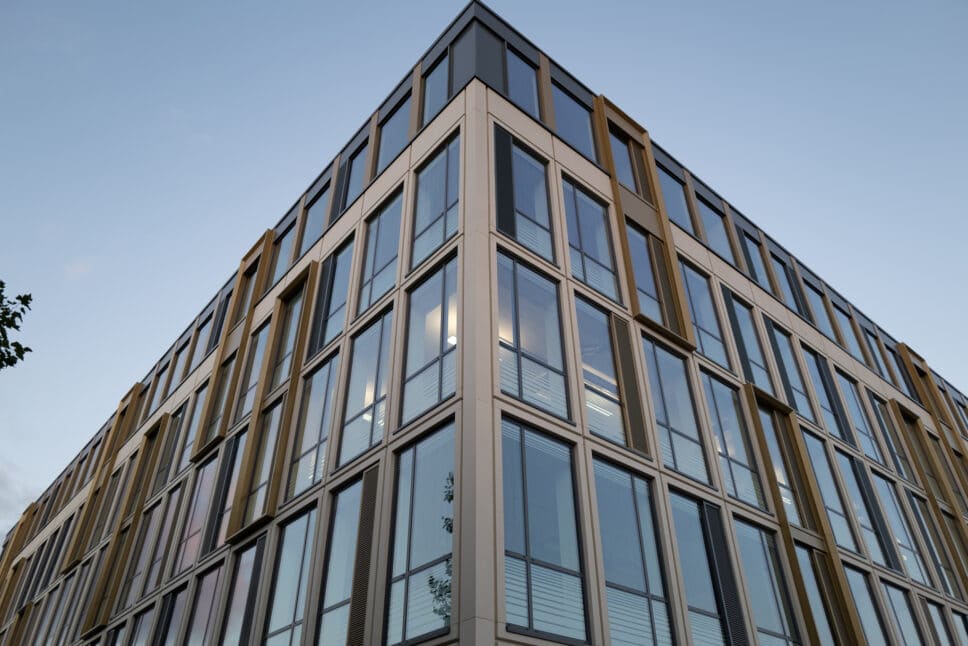
Weather performance. BS 6375-1 classifies air permeability, watertightness and wind resistance. These are classifications, not pass or fail, and the required class depends on building height, exposure and location. A window achieving a class suitable for a sheltered suburban site may be wholly inadequate at fourteen storeys on the coast. Ask for the classification, not the phrase “weather tested”.
Product standard and marking. BS EN 14351-1 is the harmonised product standard for windows, and UKCA marking depends on it. Declared performance should relate to the actual configuration being supplied.
Wind loading. Calculated to BS EN 1991-1-4 for the specific building, elevation and height. This is a project calculation, not a system property, and it frequently determines maximum sash sizes and glass thickness.
Security. PAS 24 for enhanced security performance and Secured by Design where required. On new dwellings via a developer or contractor, including apartments, Approved Document Q applies.
Fire. Means of escape provision under Approved Document B, and for relevant buildings above 18 metres the restrictions on combustible materials in external walls affect what can be used in and around the window. This is an area where product-level claims are routinely stretched, and it needs checking against the specific building rather than a brochure.
Thermal. Approved Document L, Volume 2 for non-domestic buildings, with the whole-window U-value for the actual size and configuration, not a best-case figure for a notional window.
Acoustic. In schools, Building Bulletin 93 sets the requirements, and window specification is usually the controlling factor in meeting them.
Safe cleaning and maintenance. BS 8213-1 covers design for safe cleaning. This is the standard most often overlooked and the one that causes the most expensive problems, because it determines whether the building owner needs access equipment for the next forty years. It is the reason reversible and parallel opening windows exist.
Installation. BS 8213-4 covers survey and installation. A correctly specified window installed badly is a defect claim.
Choosing a commercial windows supplier
Not every window company can do commercial work. There are thousands of aluminium window companies in the UK. Very few of them can deliver a commercial package, and the difference is not the window.
A residential fabricator is set up to make and fit windows in houses. A commercial supplier needs the heavy-duty versions of the systems, the testing evidence for the configurations being supplied, the ability to work to a construction programme rather than an installation date, CDM competence, the right insurance and the financial capacity to carry a retention.
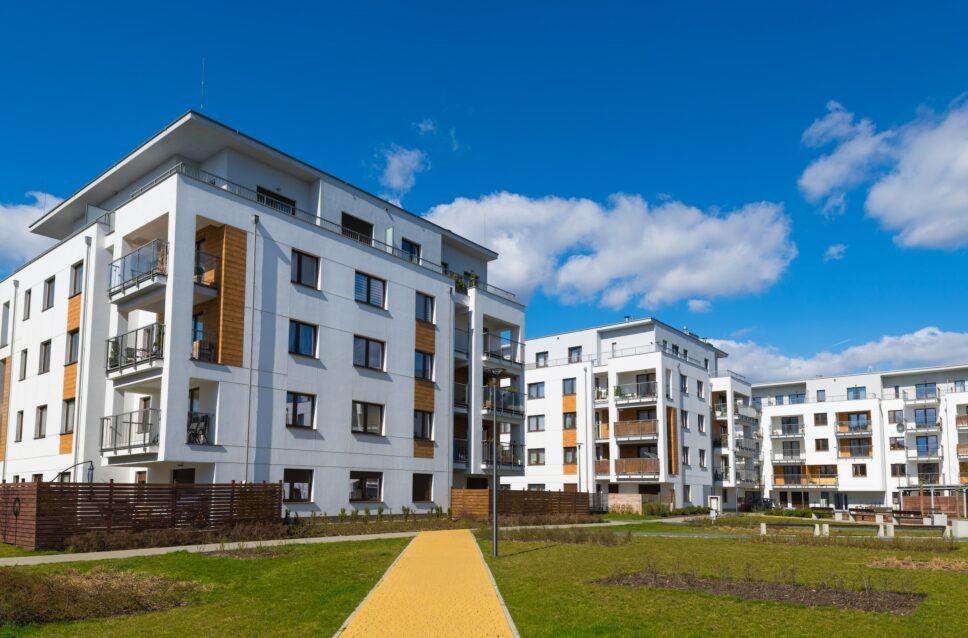
They also need to work in an occupied building without the client’s tenants, pupils or residents being the ones who complain. On a refurbishment, that is often the hardest part of the job and it is almost never in the price.
Questions worth asking before a company is on the tender list:
- Which commercial projects of this type and scale have they completed, and can you visit one?
- Are they fabricating or buying in? If buying in, from whom?
- Do they hold the test evidence for the configurations and sizes being specified, or only for the system generally?
- Who carries out the survey, and when?
- How will occupied areas be managed and made secure overnight?
- What is the position on retention, defects liability and the guarantee if the company ceases trading?
Energy efficiency, security and weather performance of commercial windows
With U-Values and window energy ratings, heavily marketed, another assumption is that domestic windows are more energy efficient. Again, this is not true. Commercial glazing systems offer the same advanced profile insulation and high specification glass.
Moreover, they go even further. Products such as highly insulated windows by Senior Systems, come with different versions of insulation providing some of the best U-Values on the market. Comar and other systems provide Passivhaus windows. These you’ll find used in commercial developments of housing but rarely directly to the homeowner.
The same applies to security and weather performance. Both commercial and residential windows undergo the same performance testing. In fact, many commercial windows come with substantially better weather rated than those sold for the home.
Most of the major aluminium systems in the UK provide commercial products. Unlike home improvement companies, systems companies are also substantially involved in the specification of new and refurbished buildings
Types of commercial aluminium windows
Clarifying the diversity of the commercial windows market, is just a small selection of the types of aluminium windows widely specified in commercial buildings. They’re also widely used in commercial developments of new homes.
Commercial Casement Windows.
Side-hung casements are hinged at one side and open outwards. Top-hung windows are hinged at the top, and bottom-hung windows are hinged at the bottom and open inwards. All three are widely used, and all three integrate cleanly with ground-floor framing, doors, screens and façades.
Casements remain the most common opening type in UK commercial work, and for low-rise buildings where the outside face can be reached safely they are usually the right answer.
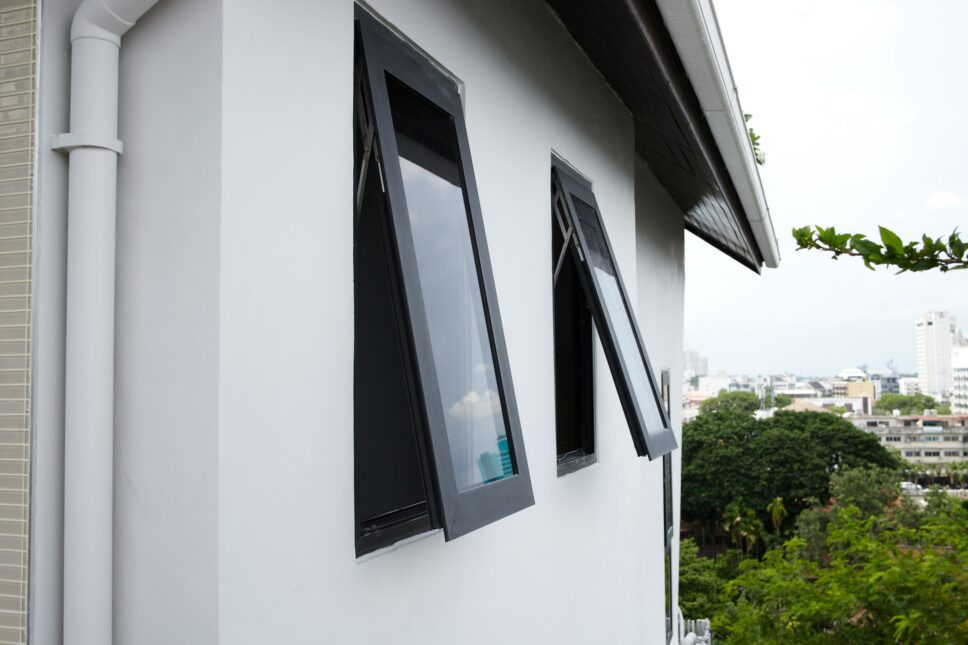
- Some of the best specified commercial casement windows include:
- Smart Systems Alitherm 600, 700, 800
- AluK C70, BD58BW and others
- Exlabesa KC51 and KS59
- Schüco AWS windows range
- Reynaers CS77
Steel-look commercial windows
As popular as the residential range of steel-inspired glazing, are steel-look commercial windows.
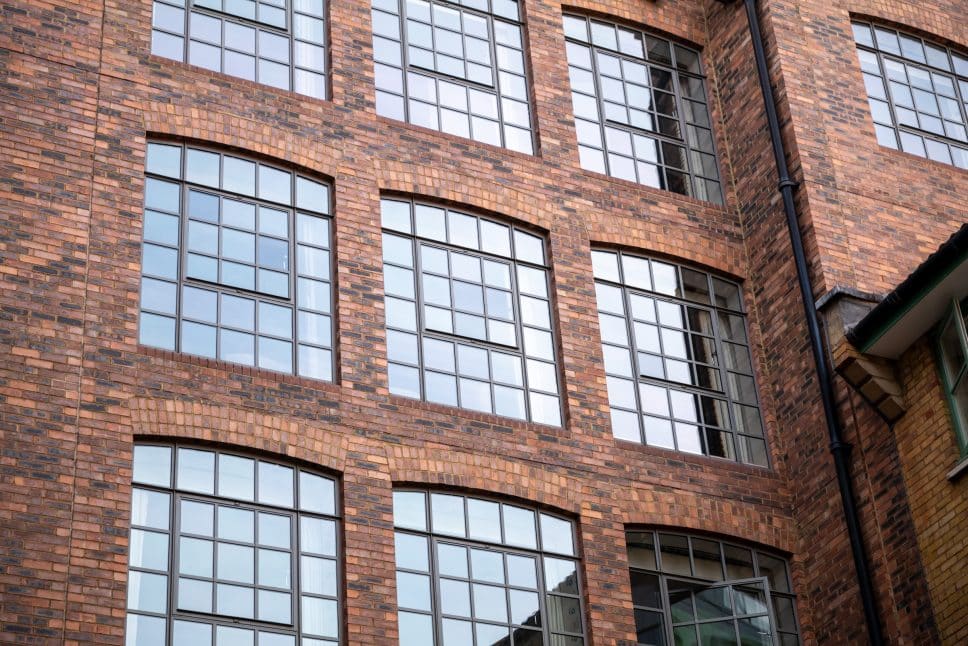
These are used in revovations of old warehouses and industrial buildings, refurbished into flats and apartments. They’re also extensively installed in factories and other commercial buildings with existing steel windows.
Smart Systems Alither Heritage HD, Kawneer GT70, Aluk, Reynaers, SL38 and SL68, Cortizo ST are just some of the well known systems companies with a commercial range of steel-look windows.
Tilt and turn commercial windows
The tilt and turn design gives two functions from one handle. Tilted back, the window provides secure background ventilation and a safety restraint at high level. Turned inwards, the full sash opens into the room, allowing the outside face of the glass to be cleaned from inside the building.
That second function is why tilt and turn dominates apartment and hotel work above the ground floor. It removes the need for external access entirely.
Tilt and turn also permits very large windows, at sizes approaching those of a door. Where the turn function is not required, bottom-hung windows tilt back only and provide basic ventilation at lower cost.
Schuco, Reynaers, Smart Systems, Exlabesa, Alumil S77, Aluk, Technal and others all offer a variety of tilt and turn commercial aluminium windows.

Reversible and Pivot Windows
Reversible windows rotate fully so that the external pane faces into the room. Both vertically and horizontally pivoting versions are available.
They are widely used in social housing refurbishment and in any building where cleaning from outside is impractical, unsafe or prohibitively expensive over the life of the building.
A variation is the top-swing reversible window, which operates like a top-hung casement until the hinges release, allowing the sash to open further and reverse in on itself.
Smart Systems, Alumil S77, Aluk, Schüco horizontal and vertical pivot windows, Technal Soleil and other barnds all offer a pivot solution.

Parallel Opening Windows
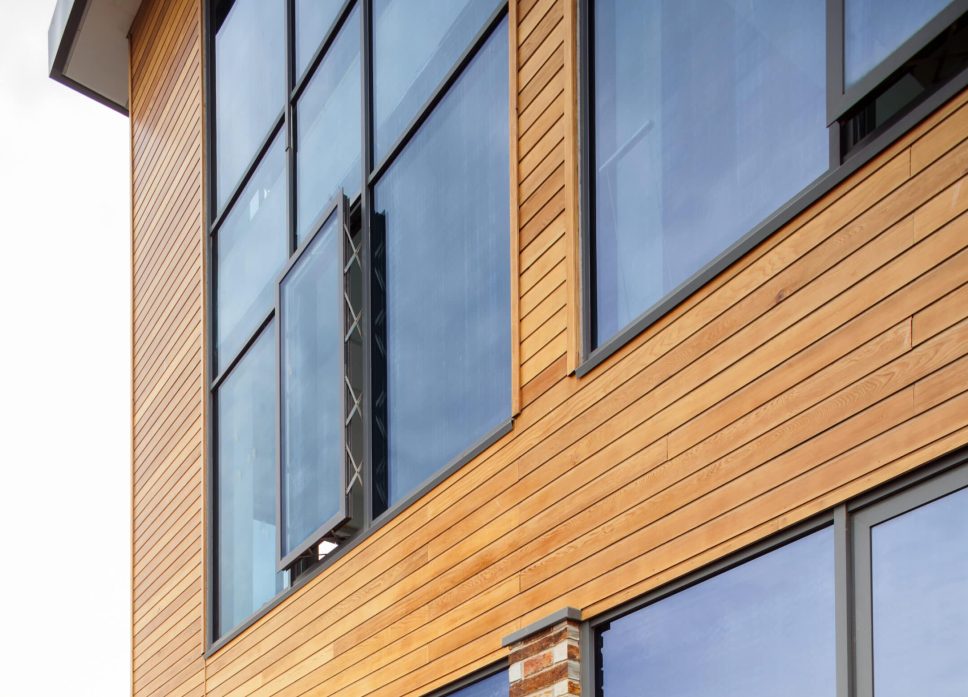
Parallel opening windows move the entire sash away from the frame while keeping it parallel to it, so ventilation passes through the gap on all four sides. The hardware is sophisticated and the result is a neat opening with no sash swinging into or out of the space.
Extensively specified in schools and universities, within curtain walling and in office buildings, where an obstructing sash would be either a hazard or a nuisance.
Typical systems: Smart Alitherm 700 with Securistyle hardware.
Specialist and controlled windows
Beyond the standard opening types you will find automatic controls and window winding gear, smoke ventilators, fire-rated and blast-resistant systems, and windows designed for specific protection requirements. How these perform is determined by the client brief or the architect’s requirements rather than by the system.
Aluminium remains the most versatile material for both general and specific-use windows, doors and screens. Most of the major aluminium systems companies offer commercial ranges, and unlike home improvement companies they are substantially involved in the specification of new and refurbished buildings. Their technical departments are a resource worth using early.
Questions worth asking before a company reaches the tender list
- Which commercial projects of this type and scale have they completed, and can you visit one?
- Are they fabricating or buying in? If buying in, from whom, and what is that relationship?
- Do they hold the test evidence for the configurations and sizes specified, or only for the system in general?
- Who carries out the survey, and at what point in the programme?
- How will occupied areas be managed, and how will the building be made secure overnight?
- What is the position on retention, defects liability and the guarantee if the company ceases trading?
- Who is responsible for the interface with the surrounding construction, and has it been detailed?
That last question causes more commercial glazing disputes than the windows themselves.
Independent help with commercial glazing
We are not a supplier and we do not sell windows. Since 1989 we have worked across the aluminium industry and we know the systems companies, the commercial fabricators and the installers who can genuinely deliver this work.

If you are an architect or specifier, we can give an independent view on which systems suit the building, what should be in the specification and where a proposed product is being stretched beyond its evidence.
For Main Contractors, we can tell you whether the companies on your tender list can deliver the package, and what is likely to be missing from the cheapest price.
Windows and doors for Housing Associations, Local Authorities or Building Managers. We can help you understand what you are being offered on a refurbishment, particularly around safe cleaning, whole-life maintenance and working in occupied buildings.
Building owners or leaseholders facing a window replacement you did not choose, we can help you understand the specification and whether it is reasonable.
There is no charge and no obligation. Get in touch and tell us about the project.